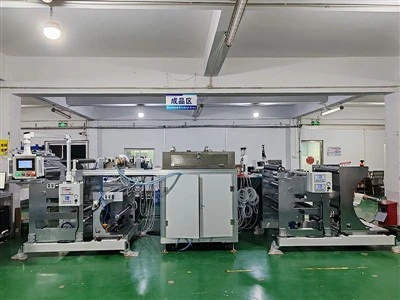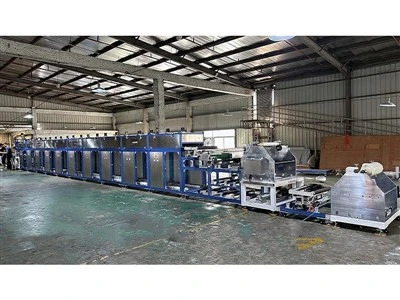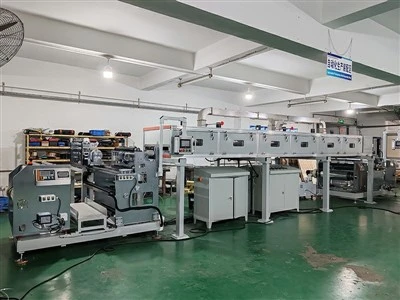

In the realm of renewable energy, solar panels stand as a cornerstone in the pursuit of a sustainable future. Their ability to convert sunlight into electricity has revolutionized power generation, offering a clean and abundant alternative to traditional fossil fuels. However, the efficiency of solar panels can be significantly hampered by reflection losses, which reduce the amount of sunlight absorbed and thereby diminish the overall power output. This is where photovoltaic coating machines come into play, offering a solution to enhance the anti - reflection performance of solar panels. As a leading supplier of photovoltaic coating machines, I am excited to share with you how these remarkable devices work their magic.
Understanding Reflection Losses in Solar Panels
Before delving into how photovoltaic coating machines improve anti - reflection performance, it's essential to understand the problem at hand. When sunlight hits a solar panel, a portion of it is reflected off the surface rather than being absorbed by the photovoltaic cells. This reflection occurs due to the difference in refractive indices between the air and the panel's surface material. The higher the refractive index mismatch, the greater the amount of reflected light. These reflection losses can account for up to 30% of the incident sunlight, which is a significant loss considering that every bit of sunlight counts in maximizing the panel's energy conversion efficiency.
The Role of Anti - Reflective Coatings
Anti - reflective coatings are thin layers applied to the surface of solar panels to reduce reflection. These coatings work by creating an intermediate refractive index between the air and the panel's surface, effectively minimizing the refractive index mismatch. By doing so, they allow more sunlight to enter the panel and be absorbed by the photovoltaic cells. This results in an increase in the panel's electrical output and overall efficiency.
How Photovoltaic Coating Machines Apply Anti - Reflective Coatings
Photovoltaic coating machines are designed to apply anti - reflective coatings with precision and consistency. Here's a step - by - step look at how they work:
Preparation of the Coating Solution
First, a specialized anti - reflective coating solution needs to be prepared. This solution typically consists of a polymer matrix along with nanoparticles or other materials that have the desired optical properties. The exact composition of the solution depends on the specific requirements of the solar panel, such as the type of photovoltaic cells used and the desired level of anti - reflection.
Cleaning and Surface Preparation of the Solar Panel
Before applying the coating, the solar panel must be thoroughly cleaned to remove any dirt, dust, or contaminants. Even minor impurities on the surface can affect the adhesion and performance of the anti - reflective coating. Photovoltaic coating machines often include a cleaning station where the panel is washed, dried, and treated to ensure a pristine surface for coating application.
Coating Application
Once the panel is prepared, the coating solution is applied using one of several techniques. Some common methods include spin coating, spray coating, and dip coating.
- Spin Coating: In spin coating, the solar panel is placed on a rotating platform. The coating solution is then dispensed onto the center of the panel, and the centrifugal force generated by the rotation spreads the solution evenly across the surface. This method is suitable for applying thin and uniform coatings on small - to medium - sized panels.
- Spray Coating: Spray coating involves using a nozzle to atomize the coating solution into small droplets and spraying them onto the panel's surface. This method is versatile and can be used to coat panels of various sizes and shapes. It also allows for precise control of the coating thickness and distribution.
- Dip Coating: Dip coating is a simple yet effective method where the solar panel is immersed in a bath of the coating solution and then slowly withdrawn. As the panel is pulled out, a thin layer of the solution adheres to the surface, forming the anti - reflective coating. This method is suitable for coating large panels and can achieve a high degree of uniformity.
Curing and Drying
After the coating is applied, it needs to be cured and dried to solidify the coating and ensure its durability. Photovoltaic coating machines are equipped with curing ovens or drying chambers that use heat, ultraviolet light, or other methods to accelerate the curing process. The curing conditions, such as temperature, time, and the type of curing agent used, are carefully controlled to ensure that the coating reaches its optimal performance.
Benefits of Using Our Photovoltaic Coating Machines
As a supplier of photovoltaic coating machines, we offer several distinct advantages that set our products apart:
High Precision and Consistency
Our machines are engineered to apply anti - reflective coatings with extremely high precision and consistency. This ensures that every solar panel receives a uniform coating, resulting in consistent anti - reflection performance across the entire production line.
Flexibility and Customization
We understand that different solar panel manufacturers have unique requirements. That's why our photovoltaic coating machines can be customized to accommodate various panel sizes, shapes, and coating materials. Whether you're producing small residential panels or large - scale commercial panels, our machines can be tailored to meet your specific needs.
Efficiency and Productivity
Our coating machines are designed for high - speed operation, which helps to increase production efficiency and reduce manufacturing costs. With advanced automation features, such as robotic handling systems and real - time monitoring, our machines can operate continuously with minimal human intervention, maximizing productivity.
Related Coating Machines
In addition to our photovoltaic coating machines, we also offer a range of other coating machines that may be of interest to you:


- Film Coating Machine: Ideal for applying thin films to various substrates, including solar panels.
- Hydrogel Coating Machine: Used for applying hydrogel coatings, which can provide additional protection and functionality to solar panels.
- Pressure Sensitive Adhesive Coater: Suitable for applying pressure - sensitive adhesives, which can be used in the assembly of solar panels.
- Comma And Micro Gravure Coater: These coaters offer precise control over the coating thickness and are commonly used in the production of high - performance solar panels.
- Medical Dressing Applicator: While not directly related to solar panels, our medical dressing applicator showcases our expertise in coating technology.
Improving Anti - Reflection Performance and Beyond
The use of our photovoltaic coating machines not only improves the anti - reflection performance of solar panels but also has a positive impact on other aspects of panel performance. For example, a well - applied anti - reflective coating can also enhance the panel's durability by protecting it from environmental factors such as dust, moisture, and UV radiation. This can extend the lifespan of the solar panel and reduce the need for maintenance and replacement, ultimately leading to cost savings for the end - user.
Contact Us for Procurement
If you're in the market for a photovoltaic coating machine to improve the anti - reflection performance of your solar panels, we invite you to reach out to us. Our team of experts is ready to assist you in selecting the right machine for your specific needs and to provide you with comprehensive support throughout the purchasing process. Whether you're a small - scale solar panel manufacturer or a large industrial facility, we have the solution for you.
References
- Green, M. A., Emery, K., Hishikawa, Y., Warta, W., & Dunlop, E. D. (2014). Solar cell efficiency tables (version 43). Progress in Photovoltaics: Research and Applications, 22(1), 1 - 9.
- Zeng, H., & Shen, Y. (2016). Review of antireflection and self - cleaning properties of superhydrophobic coatings on solar panels. Renewable and Sustainable Energy Reviews, 65, 891 - 900.
- Sivaram, V., & Sagar, A. (2017). Solar photovoltaic anti - reflective coatings: a review. International Journal of Energy Research, 41(15), 2087 - 2102.