
Safety standards for medical dressing applicators are of utmost importance in the healthcare industry. As a supplier of Medical Dressing Applicator, we understand the critical role these devices play in patient care and the necessity of adhering to strict safety guidelines.
Material Safety
The materials used in medical dressing applicators must be biocompatible. Biocompatibility means that the materials do not cause any adverse reactions when they come into contact with the human body. For instance, if the applicator is made of plastics, these plastics should be free from harmful chemicals such as phthalates and bisphenol - A (BPA). These chemicals can leach into the body and cause hormonal imbalances, especially in sensitive patients.
Moreover, the materials should be able to withstand sterilization processes. Most medical dressing applicators are sterilized before use to prevent the spread of infections. Common sterilization methods include steam sterilization, ethylene oxide sterilization, and gamma irradiation. The materials used in the applicator must not degrade or release harmful substances during these processes. For example, some polymers may break down under high - energy gamma rays, which could potentially contaminate the dressing and harm the patient.
Our Medical Dressing Applicator is crafted from high - quality, biocompatible materials that are carefully selected to meet the most stringent safety requirements. We ensure that all our materials are tested extensively to guarantee their compatibility with the human body and their ability to withstand various sterilization methods.
Design and Manufacturing Safety
The design of medical dressing applicators is crucial for safety. The applicator should have a smooth surface to prevent scratches or abrasions on the patient's skin during application. Sharp edges or rough surfaces can cause trauma to the wound area, delay healing, and increase the risk of infection.
Additionally, the design should allow for easy and accurate application of the dressing. It should have a proper grip to ensure that healthcare providers can handle it safely and precisely. For example, some applicators are designed with ergonomic handles that fit comfortably in the hand, reducing the risk of accidental drops or misapplication.
In terms of manufacturing, strict quality control measures must be in place. Every step of the manufacturing process, from the injection molding of plastic parts to the assembly of the applicator, should be carefully monitored. This includes checking for proper dimensional accuracy, ensuring that all components are securely attached, and verifying that the applicator functions as intended.


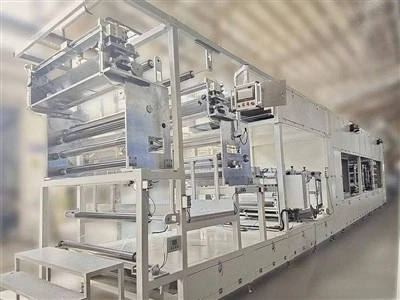
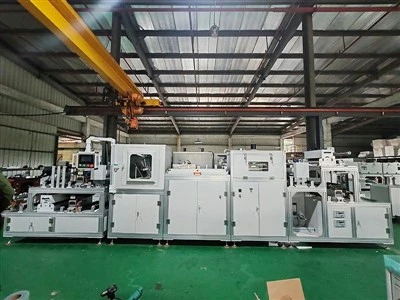
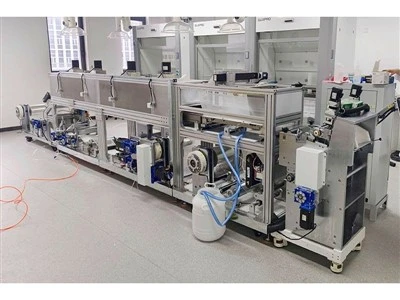
Our manufacturing facility adheres to the highest quality control standards. We use state - of - the - art manufacturing equipment, such as the Three - in - One Multi - Functional Coating Machine and the Micro Gravure Coating Machine, to produce medical dressing applicators with consistent quality. These machines allow us to control the coating thickness, uniformity, and adhesion of the dressing materials, ensuring that each applicator meets the required safety and performance standards.
Sterility Assurance
Maintaining sterility is a top priority for medical dressing applicators. Once an applicator is contaminated, it can introduce harmful microorganisms into the wound, leading to serious infections. To ensure sterility, the manufacturing environment must be clean. Cleanrooms are often used in the production of medical devices. These rooms are designed to control the number of airborne particles, preventing dust, bacteria, and other contaminants from coming into contact with the applicators during production.
After manufacturing, the applicators are packaged in a way that maintains their sterility until they are ready to be used. The packaging materials should be impermeable to microorganisms and should be able to withstand handling and storage conditions. For example, some applicators are packaged in sealed plastic pouches with a barrier layer that prevents the entry of contaminants.
Our company uses advanced sterilization techniques and high - quality packaging materials to ensure the sterility of our Medical Dressing Applicator. We follow strict protocols for sterilization validation and use UV Coating Machine 1 in some processes, which helps in maintaining the quality and sterility of the final product.
Performance and Safety Testing
Before medical dressing applicators are released to the market, they must undergo rigorous performance and safety testing. This includes testing for factors such as the strength of the applicator, the ease of use, and the effectiveness of the dressing application. For example, the applicator should be able to deliver the dressing evenly without tearing or leaving gaps.
Safety testing also involves checking for the release of any harmful substances over time. This can be done through chemical analysis and leachate testing. If an applicator is intended to be in contact with a wound for an extended period, it is essential to ensure that no toxic substances are released into the wound environment.
Our products are subjected to a comprehensive battery of tests. We work with independent testing laboratories to verify the safety and performance of our Medical Dressing Applicator. Any product that fails to meet our high - standards is immediately rejected, ensuring that only the safest and most effective products reach our customers.
Regulatory Compliance
Medical dressing applicators are subject to strict regulatory requirements. Different countries and regions have their own regulatory bodies and standards. In the United States, the Food and Drug Administration (FDA) regulates medical devices, including dressing applicators. The FDA requires manufacturers to submit pre - market notifications (510(k)) or pre - market approvals (PMA) depending on the risk classification of the device.
In the European Union, medical devices must comply with the Medical Device Regulation (MDR). This regulation sets out requirements for design, manufacturing, labeling, and post - market surveillance. Manufacturers must obtain a CE mark, which indicates that the product meets the relevant EU safety and performance requirements.
As a responsible supplier, we ensure that our Medical Dressing Applicator complies with all relevant international regulations. We stay up - to - date with the latest regulatory changes and adjust our manufacturing processes and product designs accordingly.
Adhesive Safety
Many medical dressing applicators use adhesives to secure the dressing to the skin. These adhesives must be safe and non - irritating. They should have appropriate adhesion strength, not too strong to cause skin damage when removed, and not too weak to ensure that the dressing stays in place.
The adhesives should also be hypoallergenic. Some patients may have sensitive skin and can develop allergic reactions to certain types of adhesives. Therefore, it is essential to use adhesives that have been tested for allergenicity. Our Pressure Sensitive Adhesive Coater is used to apply high - quality, hypoallergenic adhesives to our medical dressing applicators, ensuring a secure but gentle attachment to the skin.
If you are in the market for high - quality, safe medical dressing applicators, we invite you to get in touch with us for procurement discussions. Our team of experts is ready to assist you in finding the best solutions for your specific needs. We are committed to providing products that meet the highest safety standards and contribute to the well - being of patients.
References
- European Commission. (n.d.). Medical Device Regulation (EU) 2017/745. Brussels: European Commission.
- U.S. Food and Drug Administration. (n.d.). Medical Devices. Silver Spring, MD: U.S. Food and Drug Administration.
- ISO 10993 - Biological evaluation of medical devices. International Organization for Standardization.