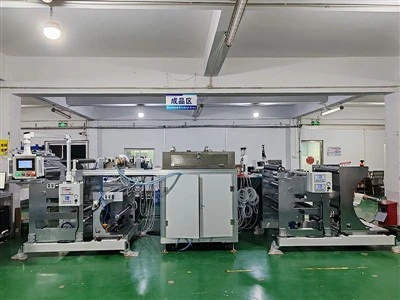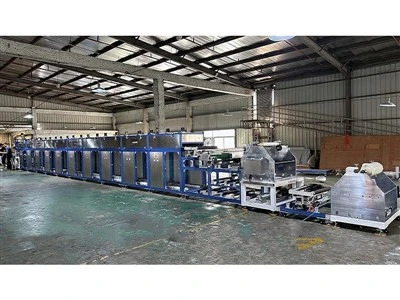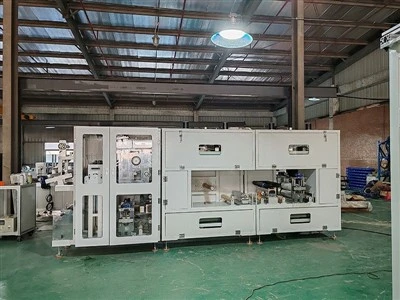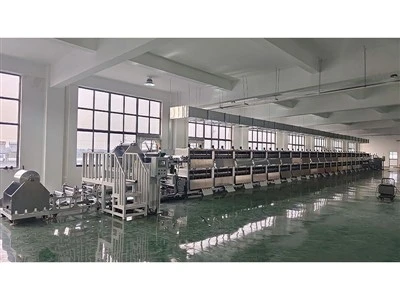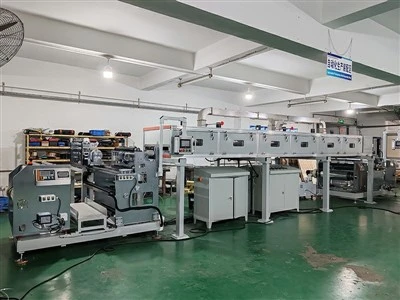

Choosing the right coating curing method for a coating machine is a crucial decision that can significantly impact the quality, efficiency, and cost of your coating process. As a leading coating machine supplier, we understand the importance of this choice and are here to guide you through the process. In this blog post, we will explore the different coating curing methods available, their advantages and disadvantages, and how to select the most suitable one for your specific needs.
Understanding Coating Curing
Coating curing is the process of transforming a liquid coating into a solid film by removing the solvent or causing a chemical reaction. This is essential for achieving the desired properties of the coating, such as hardness, adhesion, and durability. There are several methods of curing coatings, each with its own unique characteristics.
Types of Coating Curing Methods
Air Drying
Air drying is the simplest and most traditional method of curing coatings. It involves allowing the coating to dry naturally in the air at room temperature. This method is suitable for coatings that have a low viscosity and a fast evaporation rate.
Advantages
- Low cost: It requires no additional equipment or energy consumption.
- Simple process: No special skills or training are required.
- Suitable for small-scale operations: Ideal for hobbyists or small workshops.
Disadvantages
- Slow curing time: Can take several hours or even days to fully cure, depending on the coating and environmental conditions.
- Susceptible to dust and contaminants: The coating is exposed to the air during the curing process, which can lead to surface defects.
- Limited control: Environmental factors such as humidity and temperature can affect the curing process.
Oven Curing
Oven curing involves placing the coated substrate in an oven and heating it to a specific temperature for a set period of time. This method is commonly used for coatings that require a higher temperature to cure.
Advantages
- Faster curing time: Oven curing can significantly reduce the curing time compared to air drying.
- Consistent results: The controlled environment of the oven ensures uniform curing and better quality coatings.
- Suitable for high-volume production: Can handle large quantities of coated substrates at once.
Disadvantages
- High energy consumption: Ovens require a significant amount of energy to operate, which can increase the cost of production.
- Limited substrate size: The size of the oven limits the size of the substrates that can be cured.
- Potential for substrate damage: High temperatures can cause warping or damage to some substrates.
UV Curing
UV curing uses ultraviolet light to initiate a chemical reaction in the coating, causing it to cure almost instantly. This method is commonly used for coatings that contain photoinitiators, which are chemicals that react to UV light.
Advantages
- Extremely fast curing time: UV curing can cure coatings in seconds, which increases productivity.
- Low energy consumption: UV lamps consume less energy compared to ovens.
- Environmentally friendly: UV-curable coatings typically have low VOC (volatile organic compound) emissions.
- Good adhesion and hardness: UV-cured coatings often have excellent adhesion and hardness properties.
Disadvantages
- High initial cost: UV curing equipment can be expensive to purchase and install.
- Limited coating thickness: UV light has limited penetration depth, so it is not suitable for thick coatings.
- Safety concerns: UV light can be harmful to the skin and eyes, so proper safety measures must be taken.
Infrared Curing
Infrared curing uses infrared radiation to heat the coating and the substrate. This method is similar to oven curing but uses infrared lamps instead of convection heating.
Advantages
- Fast curing time: Infrared radiation can heat the coating quickly, resulting in a shorter curing time.
- Energy-efficient: Infrared lamps are more energy-efficient than ovens because they directly heat the coating and substrate, rather than the surrounding air.
- Suitable for a variety of substrates: Infrared curing can be used on a wide range of substrates, including plastics, metals, and wood.
Disadvantages
- Non-uniform heating: Infrared radiation can cause uneven heating, especially on substrates with complex shapes.
- Potential for substrate damage: High-intensity infrared radiation can damage some substrates.
- Limited control: It can be difficult to control the temperature and curing process precisely.
Factors to Consider When Choosing a Curing Method
Coating Type
Different coatings have different curing requirements. For example, solvent-based coatings may require air or oven drying, while UV-curable coatings are designed for UV curing. It is important to choose a curing method that is compatible with the coating you are using.
Substrate Material
The substrate material can also affect the choice of curing method. Some substrates, such as plastics, may be sensitive to high temperatures and require a low-temperature curing method. Others, such as metals, can withstand higher temperatures and may be suitable for oven or infrared curing.
Production Volume
If you are producing a large volume of coated products, you will need a curing method that can handle the high throughput. Oven curing and UV curing are often preferred for high-volume production because they offer fast curing times.
Cost
The cost of the curing method is an important consideration. This includes the cost of the equipment, energy consumption, and maintenance. Air drying is the least expensive method, while UV curing and oven curing can be more costly.
Environmental Impact
If environmental concerns are a priority, you may want to choose a curing method that has low VOC emissions. UV curing and some water-based coatings are generally more environmentally friendly than solvent-based coatings cured by air or oven drying.
Matching Curing Methods to Coating Machines
As a coating machine supplier, we offer a variety of coating machines, and each type may be better suited to a particular curing method.


- Comma Blade & Micro Gravure Coater Comma Blade & Micro Gravure Coater: This type of coater is often used for applying thin coatings. UV curing can be a great option for these thin coatings due to its fast curing time and ability to provide a smooth finish.
- Waterproof Material Coating Machine Waterproof Material Coating Machine: Waterproof coatings may need to be cured thoroughly to ensure their effectiveness. Oven curing or infrared curing can be used to achieve a high level of curing and durability.
- Perovskite Coating Machine Perovskite Coating Machine: Perovskite coatings are sensitive to high temperatures. Air drying or low-temperature UV curing may be more suitable to avoid damaging the perovskite material.
- Photovoltaic Coating Machine Photovoltaic Coating Machine: Photovoltaic coatings need to have high transparency and adhesion. UV curing can be a good choice as it can provide these properties quickly and efficiently.
- Medium Lithium Battery Coating Machine Medium Lithium Battery Coating Machine: For lithium battery coatings, safety and precision are crucial. Infrared curing can be used to heat the coating evenly without overheating the battery cells.
Conclusion
Choosing the right coating curing method for your coating machine is a complex decision that requires careful consideration of several factors. By understanding the different types of curing methods, their advantages and disadvantages, and the specific requirements of your coating and substrate, you can make an informed choice that will result in high-quality coatings and efficient production.
As a coating machine supplier, we are committed to helping you select the most suitable coating machine and curing method for your needs. If you have any questions or would like to discuss your specific requirements, please don't hesitate to contact us for further information and potential procurement discussions.
References
- Paint and Coating Testing Manual: Fourteenth Edition of the Gardner - Sward Handbook, edited by Thomas M. Hess.
- Coatings Technology Handbook, Third Edition, edited by Edward D. Pellico.
- Industrial Coatings: A Guide to Their Production, Properties, and Applications, by Peter M. Blythe.