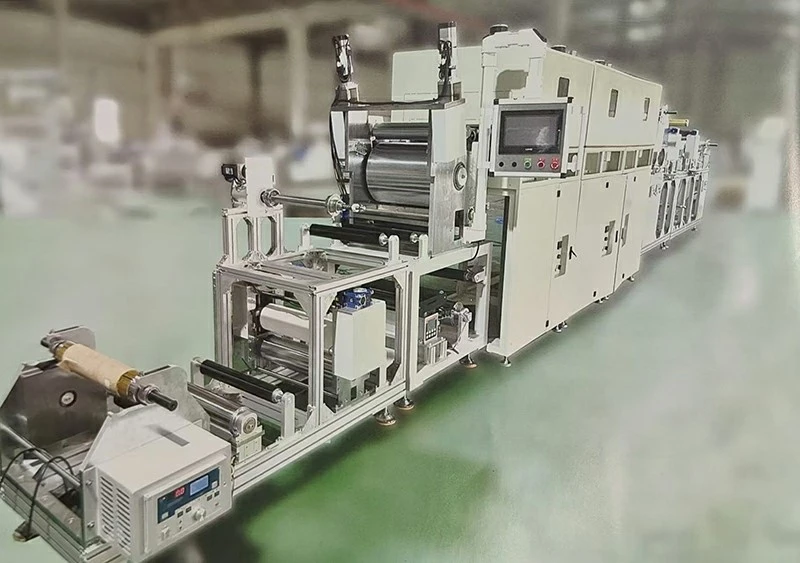

Coating production line operation process
A coating production line is an automated manufacturing system designed to uniformly apply specific coatings onto the surfaces of various substrates. In the following sections, we will provide a detailed overview of the basic operational workflow of a coating production line, as well as its specific applications in the manufacturing of vehicle wraps.
Basic Operational Workflow of a Coating Production Line
Preparation Phase: Before production begins, personnel must inspect the equipment to ensure it is functioning correctly and verify that all necessary coatings, substrates, and other materials are ready. Additionally, process parameters must be configured in accordance with specific production requirements.
Loading Phase: The substrate to be coated is positioned at the starting point of the production line. This step is typically executed by automated machinery to ensure the substrate is laid flat and positioned with precision.
Coating Phase: During the coating phase, the coating material is applied uniformly onto the substrate's surface using specialized coating equipment (such as doctor blades, roller coaters, etc.). This stage requires strict control over the quantity and uniformity of the coating application to ensure product quality.
Drying Phase: Once the coating is applied, the substrate passes through drying equipment to undergo a drying process. The drying temperature and duration must be adjusted based on the type and thickness of the coating to prevent cracking or incomplete drying.
Inspection and Trimming Phase: The dried product is subjected to inspection using specialized equipment to check for coating uniformity, defects, and other irregularities. If necessary, trimming or finishing operations are performed to ensure the product meets established quality standards.
Winding or Cutting Phase: Depending on the product's intended final application, the production line will either wind the coated material into rolls or cut it into specific dimensions.
Packaging and Storage Phase: Finally, the finished products are properly packaged and stored in a suitable environment to prevent moisture damage or physical deterioration.
Operational Workflow for Vehicle Wrap Coating Lines
While the operational workflow for a vehicle wrap coating line follows the basic procedures outlined above, it involves specific requirements and considerations unique to this application.
Material Selection and Preparation: Materials used for vehicle wraps must possess excellent elasticity, abrasion resistance, and weather resistance. Therefore, when selecting the substrate and coating materials, particular attention must be paid to meeting these specific performance criteria.
Precision Coating: The coating process for vehicle wraps demands a higher level of precision to ensure absolute uniformity and consistent thickness of the applied layer. This typically necessitates the use of high-precision coating equipment and rigorous control over process parameters.
Quality Inspection: Given the more stringent quality standards applicable to vehicle wraps, the inspection and trimming phases require a significantly higher degree of meticulousness and thoroughness. Any defects that could potentially compromise the performance or aesthetic appeal of the car wrap must be promptly identified and addressed.
Customized Production: Depending on the specific vehicle model and requirements, car wraps may necessitate customized production. This entails precise measurements and design work prior to manufacturing, as well as personalized adjustments throughout the production process.
In summary, the operational workflow of a coating production line is a complex and intricate process, demanding rigorous control and exceptional technical expertise. In the context of car wrap manufacturing, this process calls for an even higher degree of professionalism and customization. By understanding and mastering these procedures, we can gain a deeper appreciation for the technology and craftsmanship that underpin high-quality car wraps.