

Product Introduction
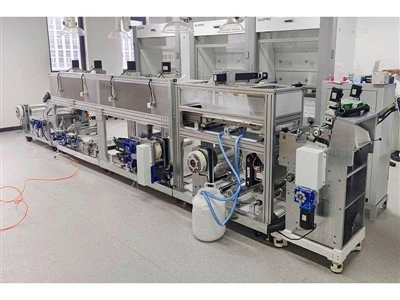
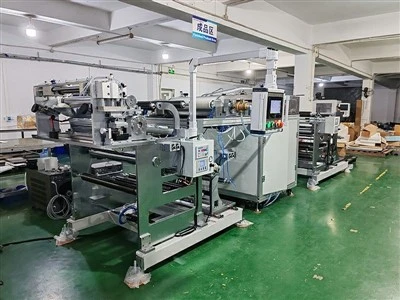
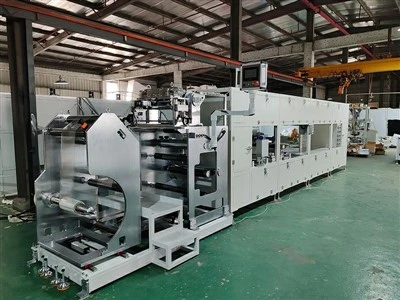
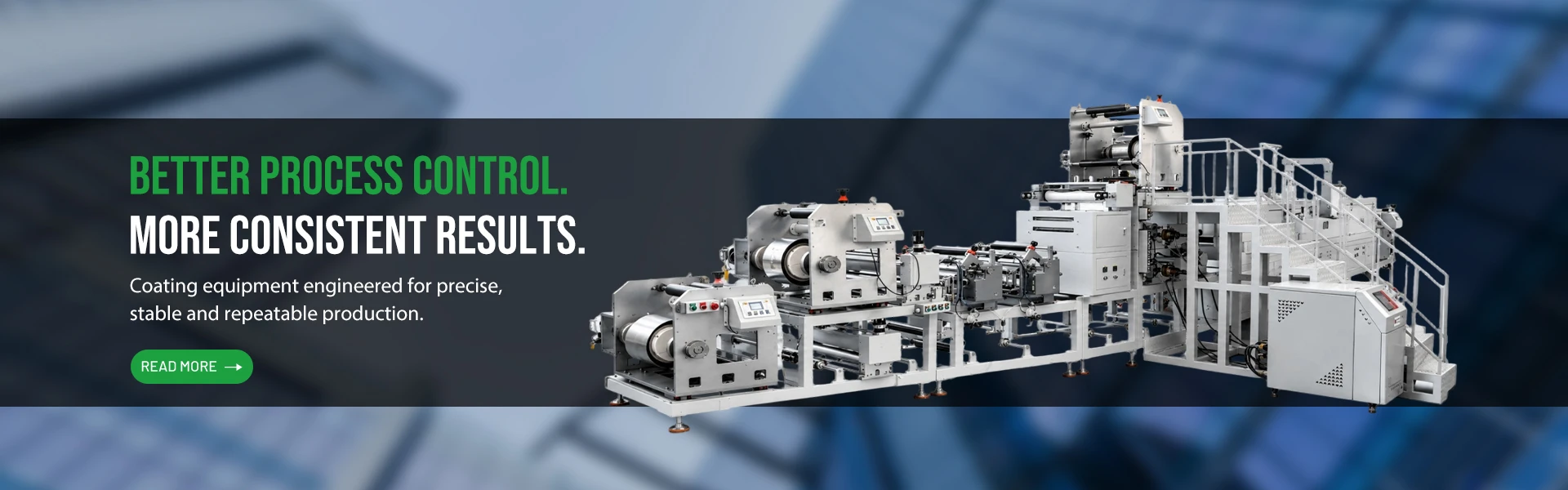
The Custom Roll-to-Roll Coating and Laminating Machine is designed for continuous coating, infrared heating, and lamination of flexible web materials. It is suitable for compatible silicone gel, hydrogel, pressure-sensitive adhesives (PSAs), and other specialized coating formulations.
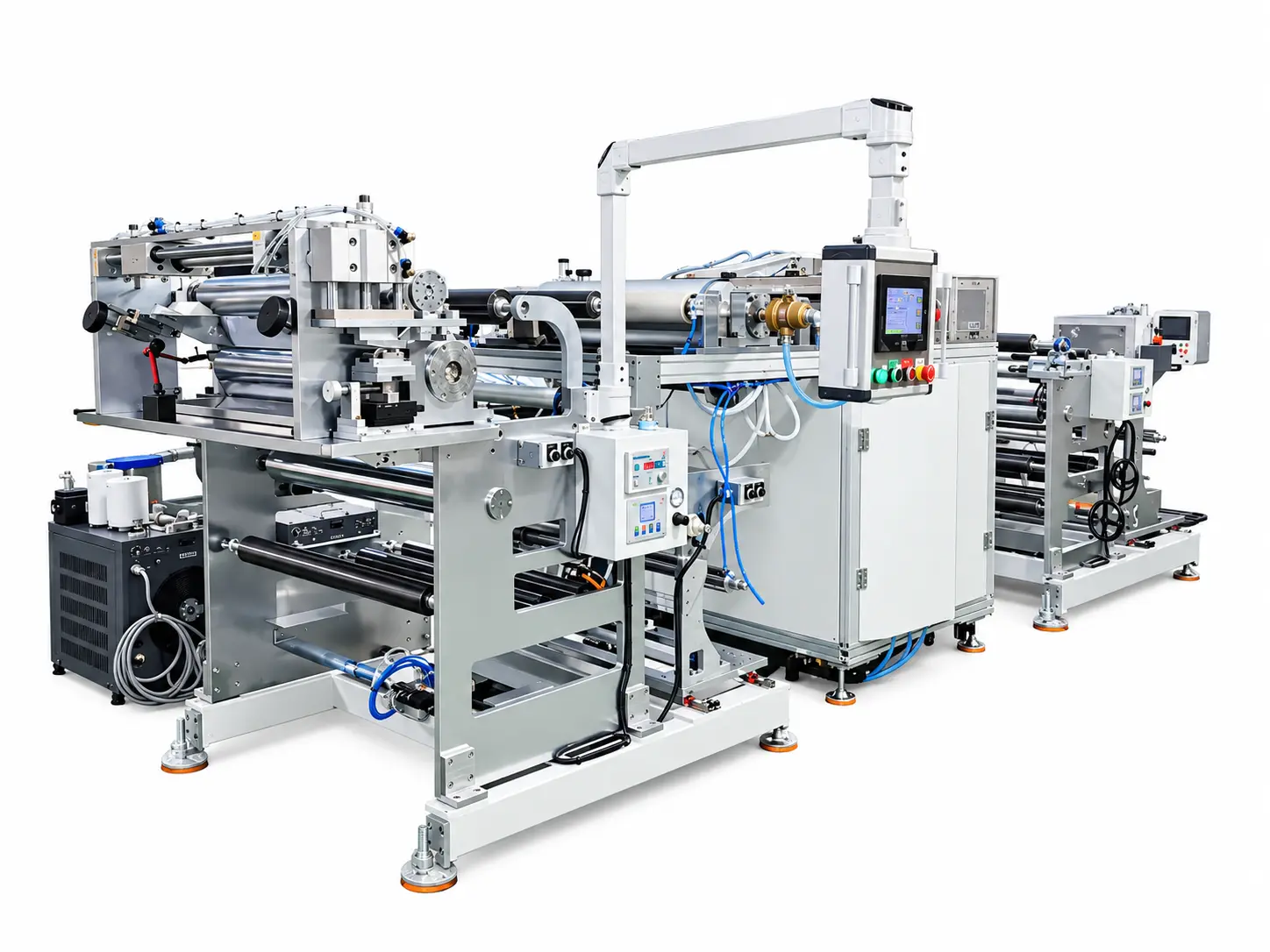
Combining unwinding, web tension control, comma blade coating, infrared heating, lamination, and rewinding, this compact production line supports the continuous processing of coated flexible materials.
The machine is designed for a coating thickness range of 20–50 μm, with a specified coating thickness tolerance of ±5 μm within this range. Its adjustable coating gap and coating-to-backing-roll speed ratio allow process engineers to optimize coating conditions for different formulations and substrates.
For manufacturers developing functional films, adhesive products, hydrogel materials, and flexible composite structures, the equipment provides an integrated platform for coating and lamination process development and production.
INNATE customizes coating equipment according to material properties, slurry viscosity, target coating thickness, curing requirements, web-handling conditions, and final product structure.
Product Specifications
|
Item |
Specification |
|
Machine type |
Custom roll-to-roll coating and laminating machine |
|
Coating method |
Comma blade coating |
|
Compatible coating systems |
Silicone gel, hydrogel, pressure-sensitive adhesives and other compatible formulations |
|
Guide roller width |
400 mm |
|
Maximum substrate width |
350 mm |
|
Maximum coating width |
340 mm |
|
Maximum mechanical speed |
5 m/min |
|
Coating speed |
Determined by curing requirements and process conditions |
|
Coating thickness range |
20–50 μm |
|
Coating thickness tolerance |
±5 μm within the specified range |
|
Coating basis-weight accuracy |
≤ ±1.5%, including the substrate and excluding abnormal edge regions |
|
Longitudinal alignment accuracy for two-sided coating |
±0.5 mm |
|
Blade adjustment |
Numerically controlled lifting and gap adjustment |
|
Backing roll diameter |
Ø320 mm, customized |
|
Backing roll runout |
≤ 5 μm |
|
Rubber roll diameter |
Ø80 mm, customized |
|
Rubber roll material |
EPDM rubber-covered roll |
|
Coating pan capacity |
Approximately 5 L, customized |
|
Tension-control range |
5–40 N |
|
Maximum unwinding/rewinding roll diameter |
Ø500 mm |
|
Core diameter |
Ø76 mm |
|
Infrared heating length |
3 m |
|
Heating temperature |
Ambient temperature–200°C |
|
Heating protection |
Integrated over-temperature protection |
|
Control system |
PLC + 7-inch color touchscreen |
|
Power supply |
Three-phase, 380 V ±10%, 50 Hz |
|
Total installed power |
30 kW |
|
Compressed air |
0.5–0.8 MPa |
|
Approximate equipment dimensions |
L 8,000 × W 600 × H 1,650 mm |
|
Approximate equipment weight |
1,500 kg |
|
Exhaust arrangement |
Specified airflow of 570 m³/h; site-side provision to be confirmed |
Products Details
Adjustable Comma Blade Coating for Controlled Thickness
Uneven coating thickness can result from unsuitable blade settings, changes in slurry behavior, substrate variations, or unstable operating conditions. These problems may affect product consistency and increase material waste.
The comma blade coating unit allows operators to adjust the blade height through a numerically controlled lifting mechanism. The coating-to-backing-roll speed ratio can also be adjusted through the touchscreen interface.
Key features include:
Comma blade coating technology
Numerically controlled blade-height adjustment
Adjustable coating speed ratio
Manually adjustable coating-width setting
Specified coating thickness range of 20–50 μm
Specified coating thickness tolerance of ±5 μm within the stated range
Engineering value: Adjustable coating parameters give operators practical ways to investigate and optimize coating thickness. Actual results depend on the formulation, substrate, operating conditions, and measurement method.
Web Tension Control for Flexible Substrates
Wrinkles, web wandering, and unstable material transport can interrupt continuous coating and create alignment problems during lamination. These issues are particularly relevant when processing thin films, nonwoven materials, and elastic substrates.
The machine incorporates a servo-driven unwinding unit, web-guiding and spreading components, and a controlled winding arrangement. The specified tension-control range is 5–40 N.
Engineering value: Controlled web transport helps maintain a more stable operating path and provides a basis for reducing wrinkles and tracking deviations when the material and process are properly matched to the equipment.
For sensitive or stretchable substrates, the appropriate tension setting should be established through material trials rather than applying the same setting to every substrate.
Integrated Infrared Heating and Curing
Insufficient drying or curing can affect the handling, adhesion, and subsequent lamination of coated materials. The required thermal conditions vary with formulation, coating thickness, and production speed.
The machine incorporates a 3-meter infrared heating section with an adjustable temperature range from ambient temperature to 200°C. Temperature monitoring and over-temperature protection are integrated into the heating section.
Engineering value: The integrated heating section allows the coating process and thermal treatment to be evaluated within one production line.
Actual drying or curing performance depends on the material system, required residence time, temperature profile, and operating speed. The appropriate process window must be established through trials.
2Integrated Lamination for Multilayer Structures
Lamination requires the incoming webs to follow the intended path and maintain suitable alignment. Wrinkles, tracking deviations, or unsuitable bonding conditions can affect the quality of the finished composite material.
The machine combines coating and lamination in a roll-to-roll process. Depending on the product structure, additional functions such as release-film unwinding, mesh unwinding, web guiding, traction, and liner peeling can be incorporated.
Engineering value: Integrating coating and lamination can simplify web transfer between process stages and provide a more coordinated production arrangement.
The final configuration depends on the required layer structure, substrate properties, and downstream processing requirements.
PLC Control and Touchscreen Operation
The machine uses a PLC control system with a 7-inch color touchscreen.
Operators can manage relevant machine settings through the HMI, including coating parameters and operating conditions. The specified standard configuration supports forward automatic web transport and continuous coating operation.
The standard control configuration includes a single recipe mode. Additional automation or recipe-management functions should be confirmed during customization.
Main Configuration
The custom roll-to-roll coating and laminating machine integrates unwinding, web guiding, tension control, comma blade coating, infrared heating, lamination and rewinding into a continuous processing system. Its modular design allows the machine configuration to be adapted to different coating formulations, substrate materials and production requirements.
The coating unit features an adjustable comma blade for controlling the wet coating layer. An integrated 3-meter infrared heating section supports thermal processing, while the lamination unit enables coated materials to be combined with release films or other compatible substrates. The machine is operated through a PLC control system with a 7-inch touchscreen.
Depending on the application, additional modules such as a release film unwinder, liner peeling unit, mesh unwinding system and two-component mixing and feeding system can be incorporated into the machine configuration.
Applications
Typical application areas include:
Silicone Gel Coating: Coating silicone gel formulations onto compatible film or flexible substrates.
Hydrogel Coating: Supporting hydrogel coating processes that require controlled coating thickness and subsequent thermal processing.
Pressure-Sensitive Adhesives (PSAs): Coating adhesive formulations for tape, film and other adhesive products.
Flexible Film Coating: Processing compatible PU films, PE films and other flexible web materials.
Nonwoven and Elastic Materials: Coating suitable nonwoven fabrics and elastic substrates, subject to material and process testing.
Release Liner Lamination: Combining coated materials with release paper, release film or other compatible layers.
Customization Options
Customization options may include:
Coating System: Comma blade coating and other suitable coating configurations, subject to process evaluation.
Coating Thickness: Configuration based on the required coating thickness range and uniformity specifications.
Web Handling: Customized unwinding, rewinding, tension control, web guiding and traction arrangements.
Heating and Drying: Infrared heating configuration and temperature settings adapted to the material's thermal requirements.
Lamination: Integration of release film unwinding, laminating and liner peeling functions according to the required layer structure.
Two-Component Mixing and Feeding: Optional A/B material storage, separate feeding and controlled mixing for compatible two-component formulations.
Machine Dimensions and Controls: Adjustments to working width, machine layout, control functions and auxiliary equipment according to project requirements.
Images


Hot Tags: Custom Roll-to-Roll Coating and Laminating Machine, China Custom Roll-to-Roll Coating and Laminating Machine manufacturers, factory, Coater for Polymer Flame Retardant Sealing Material, Dual Station Coating Equipment, Medical Polymer Composites, Microbial Test Strip Equipment, UV Coating Machine, Waterproofing Material Coater