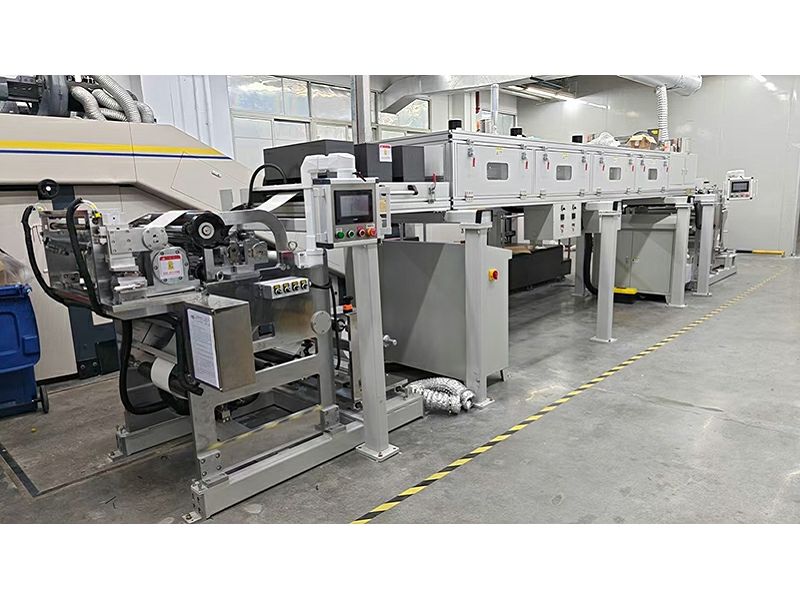

Blade Coating
Blade coating is akin to spreading butter with a spatula; the coating thickness is controlled by adjusting the gap between the blade and the substrate. This method is simple and straightforward, making it suitable for slurries with high viscosity; however, it imposes strict requirements on the flatness of the substrate and is prone to issues such as streaking or uneven thickness.
Roll Coating
Roll coating utilizes rotating rollers to transfer the slurry onto the substrate, much like a printing press. This method offers excellent coating uniformity and is well-suited for large-scale continuous production; however, it imposes certain constraints on slurry viscosity-viscosity that is too low can lead to splashing, while viscosity that is too high may compromise the transfer efficiency.
Spray Coating
Spray coating employs atomization technology to spray the slurry onto the surface of the substrate, similar to a painting operation. This method demonstrates high adaptability to various substrate shapes, enabling the coating of complex curved surfaces; however, it suffers from lower material utilization efficiency and requires measures to address issues related to spray dispersion.