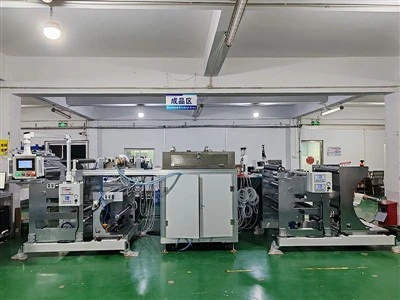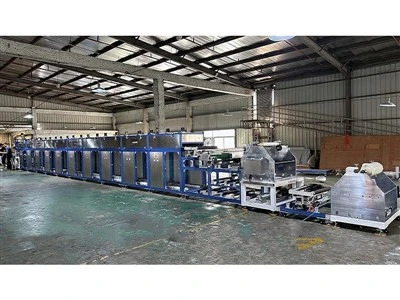

Can a Roll To Roll Coater be used for coating ferroelectric materials?
In the dynamic landscape of advanced materials and manufacturing technologies, the application of roll to roll (R2R) coating processes has been a significant advancement. As a leading provider of R2R coaters, we often encounter queries about the potential use of our equipment for coating ferroelectric materials. This blog aims to explore this question in depth, delving into the characteristics of ferroelectric materials, the capabilities of R2R coaters, and the feasibility of their combination.
Understanding Ferroelectric Materials
Ferroelectric materials are a unique class of dielectrics that exhibit a spontaneous electric polarization that can be reversed by an external electric field. This property makes them highly valuable in a wide range of applications, including non - volatile memory devices, sensors, actuators, and energy - harvesting systems. Examples of common ferroelectric materials include barium titanate (BaTiO₃), lead zirconate titanate (PZT), and lithium niobate (LiNbO₃).
The key features of ferroelectric materials that need to be considered when it comes to coating are their electrical properties, crystal structure, and surface morphology requirements. For instance, the coating process should not disrupt the crystal structure of the ferroelectric material, as this can significantly affect its ferroelectric properties. Additionally, a smooth and uniform coating is often necessary to ensure consistent electrical performance across the coated area.
Capabilities of Roll To Roll Coatings
Roll to roll coating is a continuous manufacturing process where a flexible substrate is unwound from a roll, passes through a coating station, and is then rewound onto another roll. This process offers several advantages, including high - speed production, cost - effectiveness, and the ability to coat large areas of substrate.
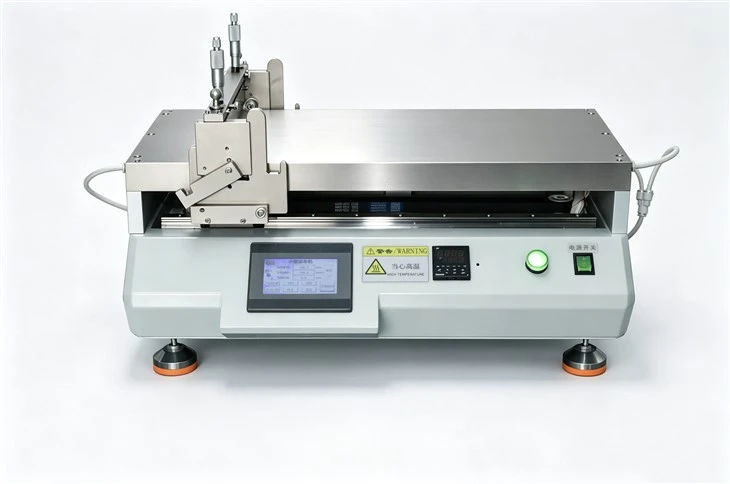
R2R coaters can be equipped with various coating methods, such as doctor blade coating, slot die coating, and micro - gravure coating. Doctor blade coating is a simple and widely used method that involves spreading a coating material over a substrate using a blade. Slot die coating, on the other hand, provides precise control over the coating thickness and uniformity by extruding the coating material through a narrow slot. Micro - gravure coating is suitable for applying thin coatings with high precision.
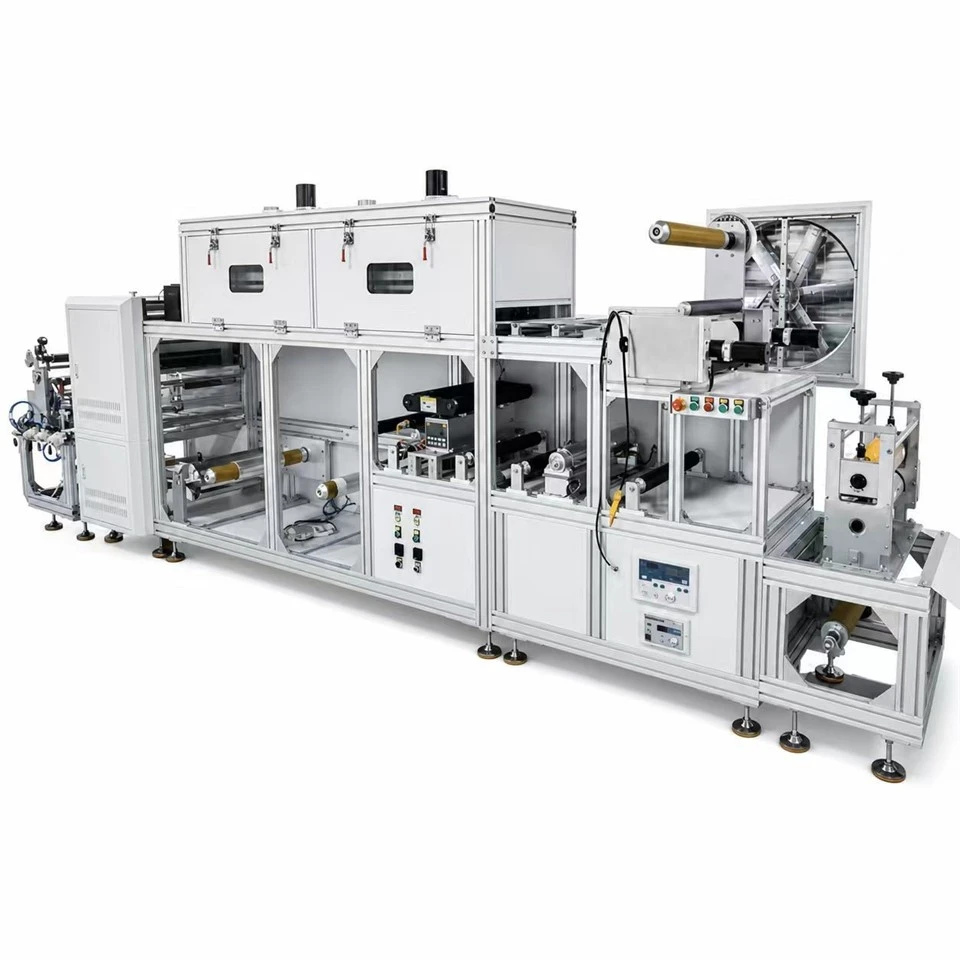
Our company offers a range of R2R coating machines, including the Multi Functional Coating Machine, Lab Flat Coater, Extended Roll - to - Roll Laboratory Coating Machine, Doctor Blade & Slot Die & Micro - Gravure Coating Machine With 2m Oven, and Roll - to - Roll Laboratory Coating Machine. These machines are designed to meet the diverse needs of different coating applications.
Feasibility of Coating Ferroelectric Materials with R2R Coaters
The use of R2R coaters for coating ferroelectric materials is indeed feasible, but it comes with certain challenges and considerations.
One of the primary challenges is the preparation of the ferroelectric coating solution. Ferroelectric materials often need to be dispersed in a suitable solvent to form a uniform coating solution. The viscosity, surface tension, and solids content of the solution can significantly affect the coating process. For example, if the viscosity is too high, it may be difficult to achieve a smooth coating, while a low - viscosity solution may lead to excessive spreading.
Another challenge is the control of the coating thickness and uniformity. Ferroelectric coatings typically require a precise thickness to ensure optimal electrical performance. In R2R coating, factors such as the coating speed, pressure, and the gap between the coating head and the substrate need to be carefully adjusted to achieve the desired coating thickness. Additionally, the uniformity of the coating across the width and length of the substrate is crucial. Any variations in thickness can lead to non - uniform electrical properties in the final product.
The curing process is also a critical step when coating ferroelectric materials. After coating, the ferroelectric layer needs to be cured to remove the solvent and to promote the formation of the desired crystal structure. In R2R coating, the curing process should be integrated into the continuous production line. Our R2R coaters can be equipped with ovens, such as the oven in the Doctor Blade & Slot Die & Micro - Gravure Coating Machine With 2m Oven, to provide a controlled environment for the curing process.
Despite these challenges, there are several advantages to using R2R coaters for coating ferroelectric materials. The high - speed production capability of R2R coating allows for large - scale manufacturing of ferroelectric devices, which can reduce the production cost. Moreover, the continuous nature of the R2R process can improve the consistency of the coating quality compared to batch processes.
Case Studies and Applications
There have been several successful applications of R2R coating for ferroelectric materials in the industry. For example, in the production of flexible ferroelectric memory devices, R2R coating can be used to deposit a thin layer of ferroelectric material onto a flexible substrate. This enables the development of lightweight and bendable memory devices, which have potential applications in wearable electronics and flexible displays.
In the field of energy harvesting, R2R - coated ferroelectric materials can be used to fabricate piezoelectric generators. These generators can convert mechanical energy, such as vibrations or pressure, into electrical energy. The ability to coat large areas of substrate using R2R techniques allows for the production of high - power density energy - harvesting devices.
Conclusion
In conclusion, a roll to roll coater can be successfully used for coating ferroelectric materials, although it requires careful consideration of the material properties, coating process parameters, and curing conditions. Our company's range of R2R coating machines, including the Multi Functional Coating Machine, Lab Flat Coater, Extended Roll - to - Roll Laboratory Coating Machine, Doctor Blade & Slot Die & Micro - Gravure Coating Machine With 2m Oven, and Roll - to - Roll Laboratory Coating Machine, are designed to meet the complex requirements of coating ferroelectric materials.
If you are interested in exploring the use of our R2R coaters for coating ferroelectric materials or have any questions about our products and services, please feel free to contact us for further discussion and procurement negotiation. We are committed to providing you with the best solutions for your coating needs.
References
- Zhang, X., & Wang, J. (2019). Ferroelectric materials for energy harvesting and storage. Advances in Energy Materials, 9(15), 1803339.
- Mallapragada, S. K., & Narayan, R. J. (2015). Roll - to - roll manufacturing for printed electronics. Annual Review of Chemical and Biomolecular Engineering, 6, 193 - 214.
- Chen, Q., & Guo, R. (2017). Coating technology for flexible electronics. Journal of Materials Chemistry C, 5(13), 3184 - 3202.