
1 Introduction
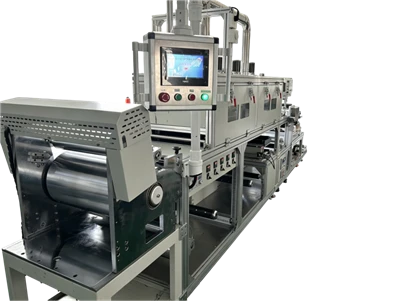
Stable coating beads are the key to uniform slot die coating. Unconstrained free liquid surfaces cause surface tension shrinkage, resulting in Neck-In defects. Slot die coating Neck-In will trigger coating width shrinkage, coating edge thickening and coating bead instability, increasing waste materials and inducing film breakage, bubbles and streaks. As a key coating defect restricting high-precision coating production, Neck-In defect optimization is an indispensable part of coating process improvement for high-end functional film manufacturing.
2 Defect Features of Slot Die Coating Neck-In
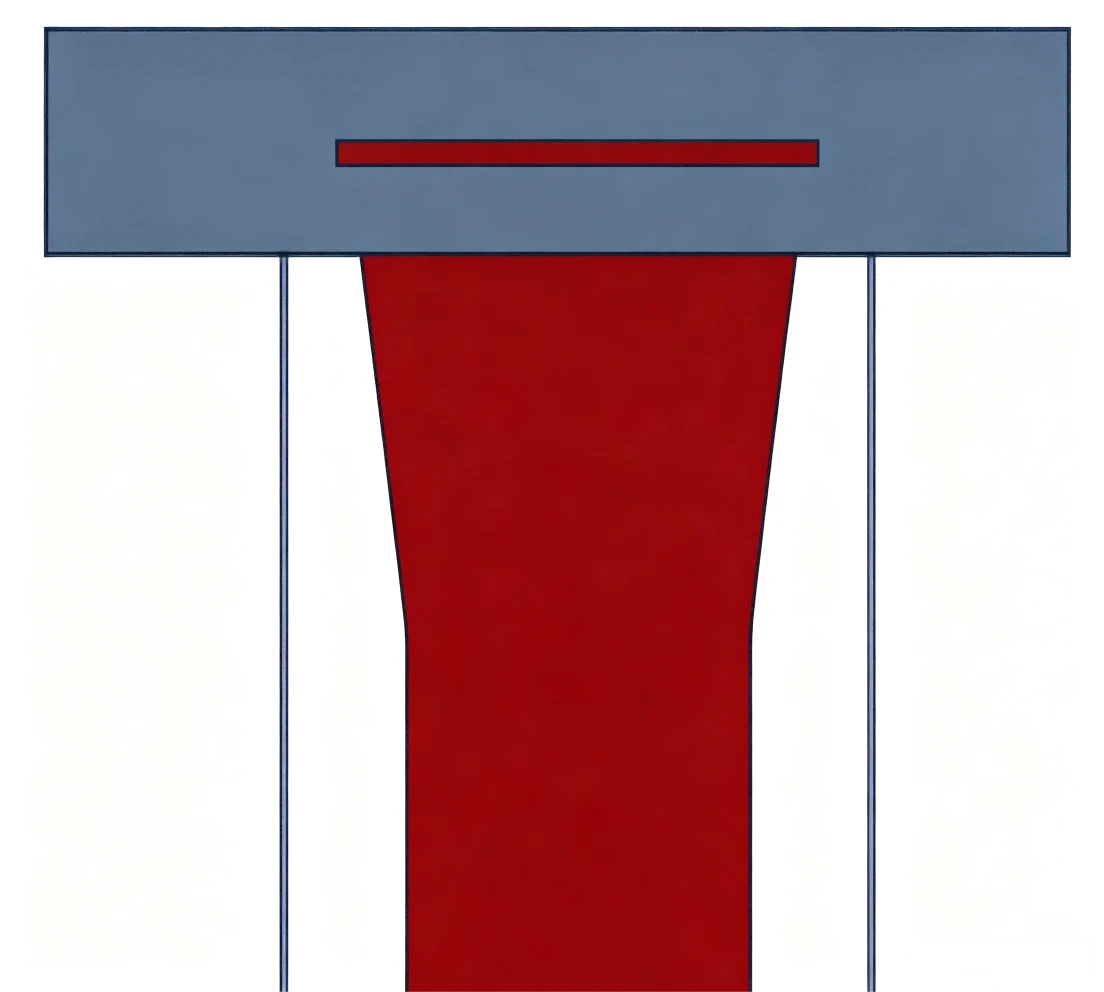
Slot die coating Neck-In defect is a typical macroscopic wet film defect, with three core features: coating width shrinkage, coating edge thickening and strong process sensitivity. Low coating speed, low-viscosity coating liquid and high surface tension will significantly aggravate coating bead instability and Neck-In shrinkage.
Width Shrinkage: The actual wet film width on the substrate is narrower than the die lip design width due to Neck-In effect.
Edge Thickening: Transverse liquid migration causes fluid accumulation at both coating edges, forming thick bulges and poor film thickness uniformity.
Process Sensitivity: Unfavorable process parameters will intensify coating bead instability and Neck-In defects.
3 Formation Mechanism of Neck-In Defect
The essential cause of slot die coating Neck-In defect is coating bead instability induced by surface tension. The transverse shrinkage and edge thickening are derived from four hydrodynamic principles, which are the theoretical basis for all coating process optimization and coating defect solutions.
Surface Tension Dominance: Free liquid surfaces tend to minimize surface energy, which is the fundamental driving force of Neck-In shrinkage.
Three-phase Contact Line Migration: The inward movement of the liquid-air-substrate contact line causes coating bead boundary shrinkage.
Transverse Fluid Accumulation: Insufficient edge liquid supply leads to fluid gathering at edges and coating edge thickening.
Inertial Force Restriction: Low coating speed cannot counteract surface tension shrinkage, resulting in severe coating bead instability and Neck-In defects.
4 Graded Coating Defect Solutions & Process Optimization
To solve slot die coating Neck-In, width shrinkage and edge thickening problems, systematic solutions including equipment modification, coating process tuning and formula adjustment are summarized for mass production application.
4.1 Equipment Modification (Fundamental Solution)
Edge Guide / Edge Dam: Install limiting baffles on both die lip ends to restrict transverse liquid flow, eliminate free surface shrinkage and completely solve Neck-In defects and coating width shrinkage.
Stepped Lip Design: Optimize end flow field to weaken surface tension effect and stabilize coating bead morphology.
Negative Pressure Auxiliary System: Stabilize three-phase contact lines and suppress coating bead instability.
4.2 Process Parameter Tuning (Fast On-site Optimization)
|
Parameter |
Tuning Direction |
Principle |
Limitations |
|
Coating Speed |
Moderate increase |
Enhance inertial drag to resist surface tension and reduce Neck-In |
Limited by drying capacity, excessive speed causes air streaks |
|
Coating Gap |
Proper reduction |
Stabilize coating bead and restrain transverse liquid flow |
Too small gap leads to scratches and streaks |
|
Liquid Flow Rate |
Slight increase |
Supplement edge liquid supply to improve edge thickening |
Over-high flow causes overall excessive film thickness |
|
Die Negative Pressure |
Optimize vacuum level |
Fix three-phase contact line and stabilize coating bead |
Excess vacuum causes air entrainment defects |
4.3 Coating Formulation Adjustment
Surface Tension Regulation: Add wetting additives to reduce interfacial tension and weaken Neck-In driving force.
Rheology Optimization: Properly increase liquid viscosity to suppress transverse fluid migration and edge thickening.
4.4 Auxiliary Optimization Methods
Substrate Primer Treatment: Improve wettability to stabilize coating contact line.
Edge Environment Control: Avoid rapid solvent evaporation and local viscosity mutation.
5 Common Commissioning Misunderstandings
In the process of optimizing slot die coating Neck-In defects, unreasonable parameter adjustment will aggravate coating bead instability and trigger new coating defects. Blind speed increase, excessive surfactant addition and single parameter tuning are the most common mistakes in coating process optimization.
6 Conclusion & Outlook
Slot die coating Neck-In defect is a typical wet film instability problem caused by surface tension, directly resulting in coating width shrinkage and coating edge thickening. Standard coating defect solutions follow the sequence: coating process optimization → formula tuning → equipment upgrading. For high-precision slot die coating production, comprehensive defect control can effectively improve coating stability and product yield. CFD simulation will further optimize coating parameters and realize precise control of Neck-In defects in future precision coating production.
To learn more about coating machines, welcome to follow Innate Intelligent Equipment Co., Ltd. We were founded in 2012, focusing on the R&D, production and customization of non-standard coating machines, material testing instruments, and turnkey automated production line solutions. We are a high-tech enterprise integrating R&D, production, sales, and after-sales service. Contact us: 13316631159@163.com; Website: https://www.getinnater.com/; Tel: +8613316631159