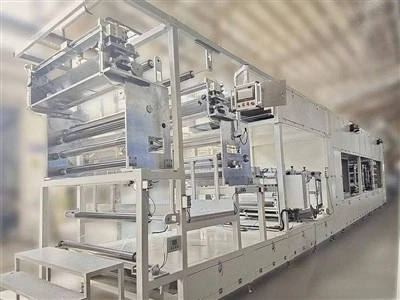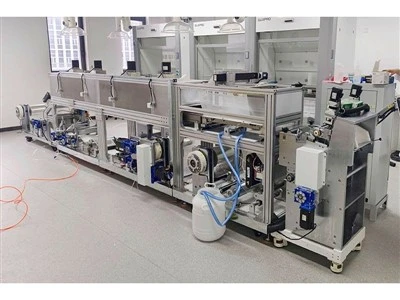

In the realm of laboratory coating processes, the Lab Flat Coater stands as a pivotal instrument, enabling precise and uniform coating applications across a diverse range of substrates. As a leading supplier of Lab Flat Coatings, we are constantly engaged in exploring the intricacies of coating technology to enhance the quality and performance of our equipment. One of the critical factors that significantly influence the coating quality is the substrate roughness. In this blog, we will delve into the effects of substrate roughness on the coating quality of a Lab Flat Coater, shedding light on the underlying mechanisms and practical implications.
Understanding Substrate Roughness
Substrate roughness refers to the irregularities or deviations in the surface topography of the material onto which the coating is applied. These irregularities can vary in size, shape, and distribution, and are typically characterized by parameters such as Ra (arithmetical mean roughness), Rz (average maximum height of the profile), and Rq (root mean square roughness). The roughness of a substrate can be influenced by various factors, including the manufacturing process, surface treatment, and material properties.
Impact on Coating Adhesion
One of the primary effects of substrate roughness on coating quality is its impact on adhesion. Adhesion is the force that binds the coating to the substrate, and it is crucial for ensuring the durability and performance of the coated product. A rough substrate surface provides a larger surface area for the coating to adhere to, which can enhance mechanical interlocking between the coating and the substrate. This mechanical interlocking can significantly improve the adhesion strength, making the coating more resistant to peeling, delamination, and abrasion.


However, excessive substrate roughness can also have a negative impact on adhesion. If the roughness peaks are too large or irregular, they may prevent the coating from fully wetting the substrate surface, leading to the formation of voids or air pockets at the interface between the coating and the substrate. These voids can weaken the adhesion strength and reduce the overall performance of the coating. Therefore, it is essential to optimize the substrate roughness to achieve the best balance between adhesion and coating quality.
Influence on Coating Thickness and Uniformity
Substrate roughness can also affect the coating thickness and uniformity. A rough substrate surface can cause variations in the coating thickness, as the coating material may accumulate in the valleys or depressions of the surface, while leaving the peaks relatively uncoated. This can result in a non-uniform coating thickness, which can have a significant impact on the performance and appearance of the coated product.
To minimize the effects of substrate roughness on coating thickness and uniformity, it is important to use a coating method that is compatible with the substrate surface. For example, the Multi Function Coating Machine With Doctor Blade, Slot Die And Micro Gravure Coating Modes offers multiple coating modes that can be adjusted to accommodate different substrate roughness levels. The doctor blade coating mode, for instance, can be used to apply a thin, uniform coating layer on a rough substrate surface by scraping off the excess coating material.
Effect on Coating Surface Finish
The surface finish of the coating is another important aspect of coating quality, as it can affect the appearance, functionality, and durability of the coated product. Substrate roughness can have a significant impact on the coating surface finish, as it can transfer the surface irregularities of the substrate to the coating layer. This can result in a rough or uneven coating surface, which may not meet the desired aesthetic or functional requirements.
To achieve a smooth and uniform coating surface finish, it is important to prepare the substrate surface properly before coating. This can involve processes such as sanding, polishing, or chemical treatment to reduce the substrate roughness and create a smooth and clean surface. Additionally, using a high-quality coating material and a suitable coating method can also help to improve the coating surface finish.
Practical Considerations for Coating on Rough Substrates
When coating on rough substrates, there are several practical considerations that need to be taken into account to ensure the best coating quality. Firstly, it is important to select the appropriate coating material and formulation. Some coating materials are more suitable for rough substrates than others, as they have better adhesion properties or can fill in the surface irregularities more effectively.
Secondly, the coating process parameters need to be optimized to accommodate the substrate roughness. This may involve adjusting the coating speed, pressure, temperature, or viscosity of the coating material to ensure a uniform coating thickness and good adhesion. Additionally, using a multiple-pass coating technique or a pre-coating primer can also help to improve the coating quality on rough substrates.
Conclusion
In conclusion, the substrate roughness has a significant impact on the coating quality of a Lab Flat Coater. It can affect the coating adhesion, thickness, uniformity, and surface finish, all of which are crucial for the performance and appearance of the coated product. As a supplier of Lab Flat Coatings, we understand the importance of substrate roughness in the coating process, and we are committed to providing our customers with high-quality coating equipment and solutions that can address the challenges associated with rough substrates.
If you are interested in learning more about our Lab Flat Coaters or have specific coating requirements, we encourage you to [contact us](insert general contact way) for a detailed discussion. Our team of experts is always ready to assist you in selecting the most suitable equipment and coating solutions for your needs. We look forward to the opportunity to work with you and help you achieve the best coating results.
References
- ASTM D 7127 - 16, Standard Test Method for Measuring Surface Roughness of Blast Cleaned Steel Surfaces Using a Portable Stylus - Instrument.
- Painter, K. E., & Francis, L. F. (1999). Adhesion and adhesives technology: an introduction. Chapman & Hall.
- Mittal, K. L. (Ed.). (1992). Adhesion measurement of films and coatings: theory and practice. VSP.