The machine is chosen and the quote is signed. Then finance opens the budget sheet, and the quote turns out to be one line on it.
The machine itself is the largest item on that line. The rest sits in several places. None of them looks large on its own, and together they come to a good part of another machine. Almost none of it appears in the equipment price.
So before anything else, ask where the coating machine manufacturer's idea of the line stops.
Go through the scope. Some equipment suppliers quote the unwind, the rewinder, the web guide and the corona treater as separate items. The headline number drops without the total dropping with it. Listing the oven on its own line is common too. Add it all up before you talk about anything else.
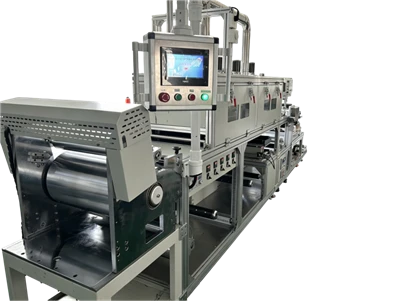
A coating machine manufacturer will normally price the press, the coating head, the oven, the unwind and rewind, and the control cabinet. Once the machine leaves the works, the money moves to someone else's column. Freight, crating, the trial run before shipment. Each one either inside or outside, and each one worth confirming in writing.
The same machine can be quoted by a coating line manufacturer and by a coating line supplier with a different boundary. Compare what sits inside each price before you compare the totals. The gap between them sometimes covers a whole piece of auxiliary equipment.
Transport is the first stretch after the works. The heaviest section is the machine base, and its crate is also the largest. The trailer, the route and whether you need an oversized load permit all follow from that. Equipment suppliers price the machine, not the road.
Then comes the port. Terminal fees, clearance and inland transport sit outside the price, and a coating line supplier normally stops at the port of loading. Some coating line manufacturers carry the freight as far as your gate and some do not, so read that line carefully. Duty follows the tariff schedule where you are, so the same line lands at different rates in different countries. Ask a customs broker to price your actual equipment list.
Your building has its own account at the other end.
Clear height and door openings cause the most trouble. An older building was laid out around the equipment of its day, and its doors are often a size narrower than today's machine. A fine machine that will not pass the door frame is still a machine that will not pass the door frame. Floor loading, floor treatment, foundation thickness and whether a pit is needed all sit in this item.
Then power, compressed air and cooling water. A solvent process adds exhaust and abatement. This is the second place that gets underestimated. If supply capacity is short it has to be enlarged, which means an application, a queue and construction, and a transformer and switchgear at the end of it. If the switch room sits far away, the cable in between costs money too, and it never shows on the quote.
Exhaust has to reach the plant header, and the duct size and airflow have to match. Write down who builds that section. Most equipment suppliers carry a utilities schedule, and will hand it over with the quotation if you ask. Ask the coating machine manufacturer for it early, because your own estimate will be rougher.
Hazardous area classification belongs in the same pile. A solvent process needs lighting, fans and wiring that match the zoning. A machine builder normally excludes the classified electrical work inside your building. Work like this rarely gets raised at quotation stage unless you raise it.
The people who own plant safety will walk the line before you start up. Their list usually adds interlocked doors and extra guarding. By then the machine is on the floor, and parts, rework and revalidation run into weeks.
Hoisting, positioning, levelling, grouting, piping and electrical work mostly sit on the buyer's side. Whatever the contract leaves open turns into a verbal agreement on site. A machine builder who lists those interfaces anyway is worth keeping. Half the coordination disappears once they are written down.
Walk the site before the machine ships. The route in, the spot where the crane stands, pipe racks, canopies and overhead lines. Crane capacity and a temporary slab are cheaper to arrange now than on delivery day.
One small item gets skipped more than the others. Put a separate meter on power, water and air once the machine is set. The running cost then shows up by section, and any saving later has numbers behind it.
At this point the machine is still not connected. Everything above belongs in the project budget.
The money after power-on usually gets booked as operating cost instead.
A machine that runs is not yet a machine that produces. Between first power and a stable roll there is a trial period. Parameters go in rounds, formulations one at a time. Head and tail waste and trial scrap all come out of that window. The raw material costs money, and so does the machine time it occupies.
A high scrap rate before the parameters settle is normal. Find the process window at low speed and step up from there. No line reaches design speed on the first day. That time and loss sit on your side, not theirs.
Agree in the contract on who supplies the trial material. Running your own formulation and running an alternative lead to different explanations and different responsibility.
Buy the first set of spares early. Wear parts, seals, bearings, blades and common electrical items, plus a few critical pieces held locally. Ocean freight runs thirty to forty five days. Order on the day the line stops and the machine time drains away.
Ask for the spare parts list and read how detailed it is. Not many coating line suppliers publish one worth keeping. The list itself is a filter.
Ask about replacement intervals at the same time. Blades, seals and bearings each have a service life, and writing it into the manual tells the workshop when to hold stock.
Programs, drawings, parameters and commissioning records, handed over together, save real effort the first time you change a formulation. You can find out whether a machine builder will do that before you sign. One OEM issues the whole set on a single drive with a version note.
The last line is the contingency. Capital projects rarely finish on the first budget. Building conditions, interface changes and local requirements all produce add-ons.
The best outcome is not spending it.
Read the budget sheet once more. The machine at the top, then building and utilities, installation scope, freight and duty, first spares, training, trial scrap, and a contingency at the bottom.
The number on the quote is the first line.
Ask several suppliers, put the quotes side by side, and the manufacturer who wrote the scope down stands out at once.
Published by Innater Intelligent Equipment Co., Ltd, a maker of non-standard coating machines and automated lines. Email 13316631159@163.com | Website https://www.getinnater.com/ | Tel +8613316631159