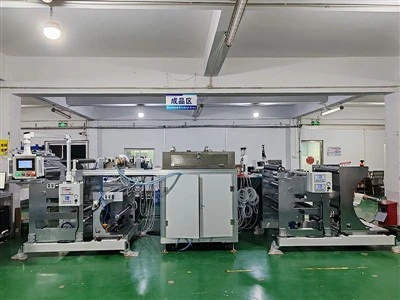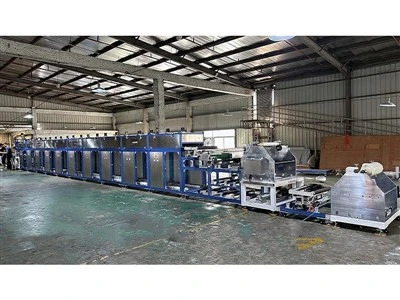

As a supplier of Laboratory Coating Machines, I often get asked about the coating anti - corrosion performance of these machines. I'm here today to share some insights on this topic and how our machines play a crucial role in achieving excellent anti - corrosion coatings.
First off, let's understand what anti - corrosion coating is all about. Anti - corrosion coatings are materials applied to the surface of a substrate to prevent or slow down the corrosion process. Corrosion can cause a lot of problems, like reducing the lifespan of the material, weakening its structural integrity, and even leading to failures in some cases. So, having a good anti - corrosion coating is super important.
Now, how do our Laboratory Coating Machines contribute to the anti - corrosion performance of the coatings? Well, it all starts with the precision of the coating process. Our machines, like the Lab Flat Coater, are designed to apply coatings with a high level of accuracy. This means that the coating thickness is uniform across the substrate. A uniform coating thickness is essential for anti - corrosion performance because if the coating is too thin in some areas, it won't provide adequate protection, and the substrate will be more prone to corrosion.
The Roll - to - Roll Laboratory Coating Machine and Mini Roll - to - Roll Laboratory Coating Machine are great for continuous coating processes. They can handle large volumes of substrates efficiently. This is important because in industrial applications, you often need to coat a large number of parts quickly. And for anti - corrosion coatings, the faster and more consistent the coating process, the better the overall performance of the coating.
Another important factor is the compatibility between the coating material and the substrate. Our machines can work with a wide variety of coating materials, including polymers, ceramics, and metal - based coatings. This flexibility allows us to choose the most suitable coating material for a specific substrate and application. For example, if you're coating a metal substrate that will be exposed to a highly corrosive environment, a ceramic - based coating might be a good choice. Our Multi Function Coating Machine With Doctor Blade, Slot Die And Micro Gravure Coating Modes can apply different types of coatings accurately, ensuring that the right coating is used for the job.
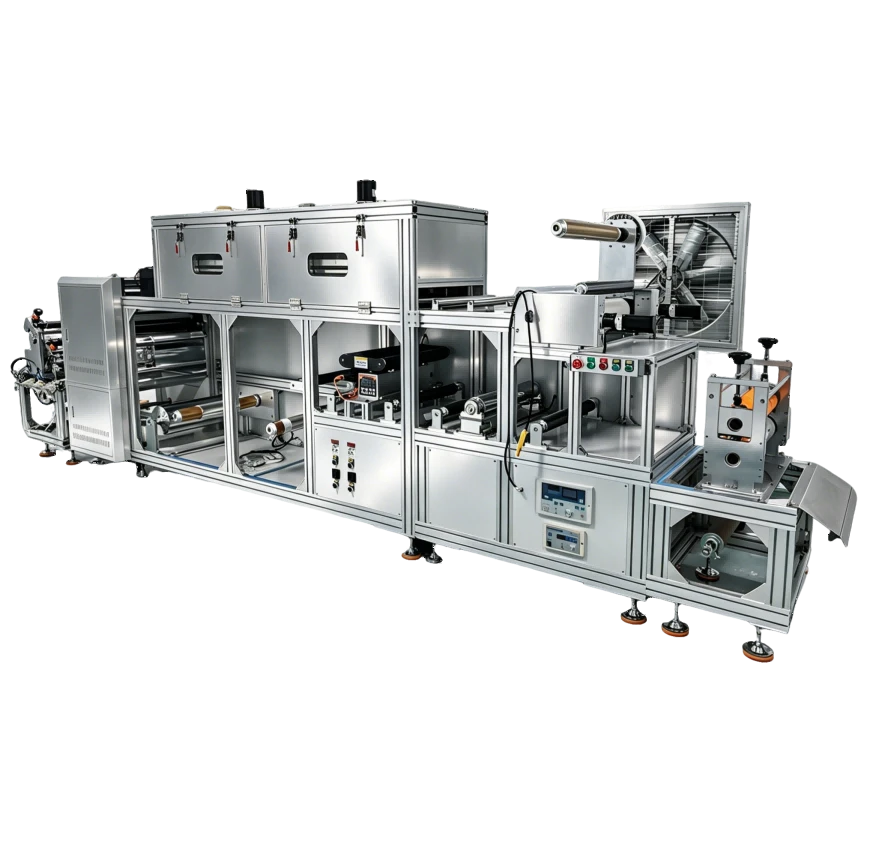
The curing process also plays a big role in the anti - corrosion performance of the coating. The Roll - to - Roll Laboratory Coating Machine With Oven has an integrated oven that allows for precise control of the curing temperature and time. Proper curing is necessary to ensure that the coating forms a strong and durable bond with the substrate. If the curing process is not done correctly, the coating may not have the desired anti - corrosion properties.
In addition to the technical aspects of the coating process, we also conduct a lot of research and development to improve the anti - corrosion performance of the coatings applied by our machines. We work with material scientists and engineers to test new coating formulations and optimize the coating parameters. This continuous improvement process ensures that our customers get the best possible anti - corrosion coatings.
Let's talk about some real - world applications. In the automotive industry, anti - corrosion coatings are essential to protect the car body from rust and corrosion. Our Laboratory Coating Machines can be used to apply high - quality coatings to automotive parts, ensuring that they last longer and look better. In the aerospace industry, where components are exposed to harsh environmental conditions, anti - corrosion coatings are even more critical. Our machines can help in applying coatings that meet the strict requirements of the aerospace industry.
When it comes to evaluating the anti - corrosion performance of the coatings applied by our machines, we use a variety of testing methods. Salt spray testing is one of the most common methods. In this test, the coated samples are exposed to a salt - fog environment for a certain period of time, and then the corrosion level is evaluated. We also use electrochemical impedance spectroscopy to measure the resistance of the coating to corrosion. These tests help us to ensure that the coatings applied by our machines meet the required anti - corrosion standards.
If you're in the market for a Laboratory Coating Machine and are concerned about the coating anti - corrosion performance, we're here to help. Our machines are designed to provide high - quality, consistent coatings that offer excellent anti - corrosion protection. Whether you're a small research lab or a large industrial company, we have the right machine for your needs.
We understand that choosing the right coating machine is a big decision, and we're willing to work with you to find the best solution. We can provide you with detailed information about our machines, including their performance, features, and price. We can also offer support in terms of installation, training, and after - sales service.
So, if you're interested in learning more about our Laboratory Coating Machines and how they can enhance the anti - corrosion performance of your coatings, don't hesitate to reach out to us. Let's start a conversation and see how we can meet your coating needs.

References
- Jones, D. A. (1996). Principles and prevention of corrosion. Prentice Hall.
- Uhlig, H. H., & Revie, R. W. (1985). Corrosion and corrosion control: an introduction to corrosion science and engineering. John Wiley & Sons.