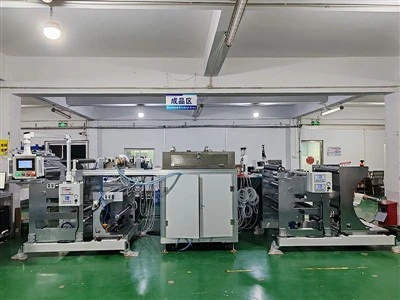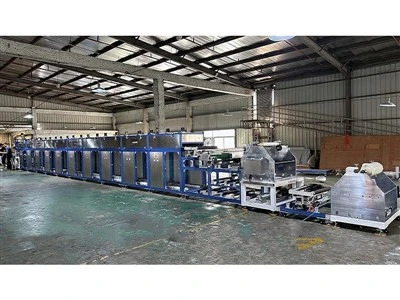

As a dedicated supplier of Roll To Roll Coaters, the control of coating material viscosity is a topic of utmost importance. In the world of coating applications, the ability to precisely manage the viscosity of coating materials can significantly impact the quality and efficiency of the overall process. This blog will delve into the key aspects of controlling coating material viscosity within a Roll To Roll Coater, providing valuable insights for those involved in coating operations.
Understanding the Significance of Viscosity in Coating Processes
Viscosity, simply put, is a measure of a fluid's resistance to flow. In the context of coating materials used in Roll To Roll Coaters, the right viscosity is crucial for several reasons. Firstly, it determines the thickness and uniformity of the coating layer. If the viscosity is too high, the coating material may not flow smoothly, resulting in uneven coverage and thicker patches on the substrate. On the other hand, if the viscosity is too low, the coating may run off the substrate or be too thin, compromising the desired coating properties.
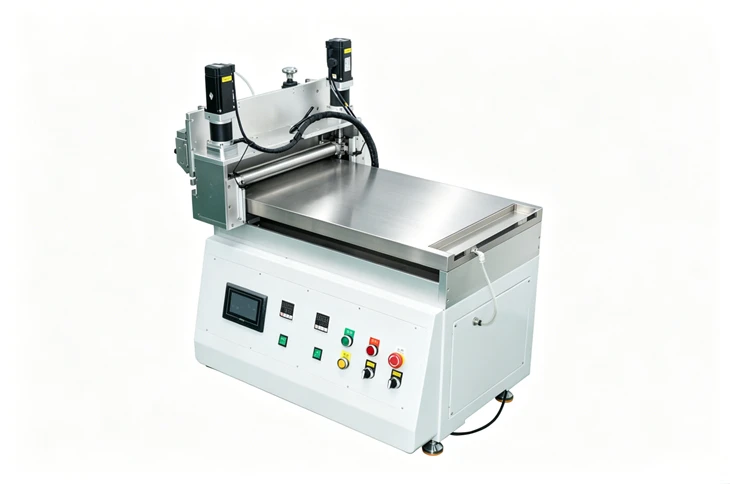

Secondly, viscosity affects the adhesion of the coating to the substrate. A well - balanced viscosity ensures that the coating adheres firmly to the surface, preventing issues such as peeling or flaking over time. Additionally, proper viscosity control is essential for the efficient operation of the Roll To Roll Coater. It allows for smooth transfer of the coating material from the reservoir to the substrate, reducing the likelihood of clogging in the coating head and other components of the machine.
Factors Influencing Coating Material Viscosity
Several factors can influence the viscosity of coating materials in a Roll To Roll Coater. Temperature is one of the most significant factors. Most coating materials exhibit a decrease in viscosity as the temperature increases. This is because higher temperatures provide more energy to the molecules in the fluid, allowing them to move more freely and reducing the internal friction that causes viscosity. Therefore, maintaining a stable temperature during the coating process is crucial.
The composition of the coating material also plays a vital role. Different additives, solvents, and polymers used in the formulation can affect its viscosity. For example, the addition of thickeners can increase the viscosity, while solvents can be used to lower it. The concentration of these components must be carefully controlled to achieve the desired viscosity.
Shear rate is another important factor. When a coating material is subjected to shear forces within the Roll To Roll Coater, such as those generated by the movement of the rollers or the flow through the coating head, its viscosity can change. Some materials are shear - thinning, meaning their viscosity decreases as the shear rate increases, while others are shear - thickening. Understanding the shear - dependent behavior of the coating material is essential for accurate viscosity control.
Techniques for Viscosity Control
Temperature Regulation
As mentioned earlier, temperature has a significant impact on viscosity. To control the viscosity through temperature, a heating or cooling system can be integrated into the Roll To Roll Coater. For example, heaters can be installed around the coating material reservoir to maintain a constant temperature. In some cases, a heat exchanger can be used to precisely control the temperature of the coating material as it flows through the system.
It is important to note that different coating materials have different temperature - viscosity relationships. Therefore, it is necessary to conduct preliminary tests to determine the optimal temperature range for a specific coating material to achieve the desired viscosity.
Solvent Addition
Solvent addition is a common method for adjusting the viscosity of coating materials. By adding a suitable solvent, the concentration of the solid components in the coating material is reduced, resulting in a decrease in viscosity. However, this method requires careful consideration. The type and amount of solvent added must be chosen based on the compatibility with the coating material and the substrate.
Over - addition of solvents can lead to issues such as poor adhesion, longer drying times, and environmental concerns. Therefore, it is crucial to develop a precise solvent - addition protocol based on the specific requirements of the coating process.
Mixing and Agitation
Proper mixing and agitation of the coating material can also help in viscosity control. In the coating material reservoir, continuous mixing ensures that the components are uniformly dispersed, preventing the formation of viscosity gradients. This is especially important for multi - component coating materials where different components may have different settling rates.
Using an appropriate mixing device, such as a mechanical stirrer or an ultrasonic mixer, can maintain a consistent viscosity throughout the coating material. Additionally, agitation can also help to release any air bubbles trapped in the coating material, which can affect the quality of the coating.
Monitoring Viscosity in Real - Time
To ensure accurate viscosity control, real - time monitoring is essential. There are several types of viscosity sensors available that can be integrated into the Roll To Roll Coater. For example, rotational viscometers measure the torque required to rotate a spindle immersed in the coating material. The torque is directly related to the viscosity of the fluid, allowing for continuous and accurate monitoring.
Capillary viscometers are another option. They measure the time it takes for a fixed volume of the coating material to flow through a capillary tube. The flow time is proportional to the viscosity of the fluid. By installing these sensors at strategic points in the coating system, such as at the inlet and outlet of the coating head, operators can monitor the viscosity in real - time and make immediate adjustments if necessary.
Case Studies and Applications
In the field of coating and laminating, the control of coating material viscosity is critical. Our Coating & Laminating Machine has been widely used in various industries. For example, in the production of bio - based cellulose hydrophobic transparent films, our Bio - Based Cellulose Hydrophobic Transparent Film Coating & Laminating Machine has demonstrated excellent performance. By precisely controlling the viscosity of the coating material, we can ensure a uniform and high - quality coating on the cellulose films, enhancing their hydrophobic and transparent properties.
In the integrated circuit (IC) manufacturing industry, our Integrated Circuit (IC) Flatbed Coater applies coatings with strict viscosity requirements. The precise control of viscosity is essential to ensure the even deposition of coatings on the delicate IC substrates, preventing any short - circuits or performance issues.
Similarly, in the lithium - ion battery industry, the Lithium - Ion Battery Flatbed Coater requires accurate viscosity control. A proper coating viscosity is necessary for the uniform distribution of electrode materials, which directly affects the battery's performance and safety.
Our Laboratory Coating Machine also provides a platform for researchers to study and optimize viscosity control in coating materials. Through small - scale experiments, researchers can test different coating formulations and viscosity control techniques, laying the foundation for large - scale industrial applications.
Conclusion
In conclusion, controlling the viscosity of coating materials in a Roll To Roll Coater is a complex but essential process. By understanding the factors that influence viscosity, implementing appropriate control techniques, and monitoring viscosity in real - time, manufacturers can achieve high - quality coatings with consistent properties.
If you are looking to enhance your coating processes and require a reliable Roll To Roll Coater with advanced viscosity control capabilities, we invite you to reach out to us for a detailed discussion. We are committed to providing customized solutions to meet your specific coating needs.
References
- Middleman, S. (1995). Fluid Mechanics in Polymer Processing. John Wiley & Sons.
- Goodwin, J. W., & Hughes, R. W. (2000). Rheology for Chemists: An Introduction. Royal Society of Chemistry.
- Tadros, T. (2009). Applied Surfactants: Principles and Applications. Wiley - VCH.