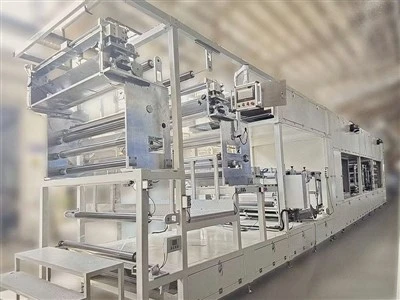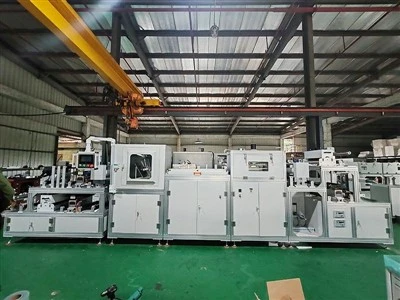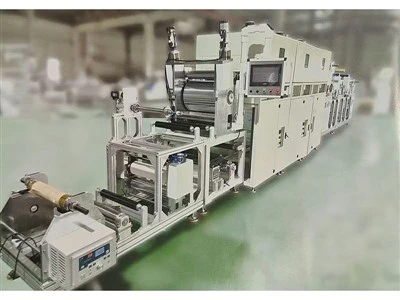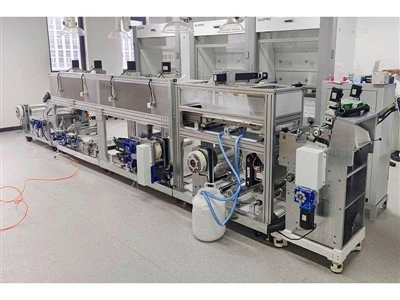

Hey folks, if you’re deep in the coating game—whether you’re a startup tinkering with new materials, a manufacturer scaling production, or a lab testing next-gen tech—you’ve probably wondered: what exactly can a Single-Station Coater handle? As someone who’s worked with these machines for years (yeah, I’m part of the team that builds and supports these bad boys), let me break this down without all the jargon. No stuffy textbook talk, just real, usable info you can actually apply.
First off, what’s a Single-Station Coater, anyway? For anyone new, it’s a coating machine that works on one substrate at a time (unlike inline coaters that do multiple pieces nonstop). That might sound limited at first, but here’s the secret: that single-station setup means way more control over every detail—speed, thickness, pressure, even the material mix. It’s perfect for small batches, custom jobs, or super precise applications where you can’t afford to mess up a run. So what materials actually work with it? Let’s go through the big ones I see customers using every day.


Let’s start with the stuff that’s everywhere: polymer and plastic substrates. I’ve run single-station coaters with everything from thin PET film (the kind in snack wrappers) to rigid PVC sheets, polycarbonate, even flexible TPU. The trick here is matching the coating method to the plastic—like if you’re doing a thin, even layer for a clear screen protector, you might use a slot-die coater head, while for thicker, rugged coatings, a roll-to-sheet setup works better. One super common request lately is waterproofing plastics—you can check out our Waterproof Material Coating Machine here if that’s your jam. These machines handle aqueous and solvent-based acrylics, polyurethanes, and even silicone coatings without warping or bubbling the plastic, which is a huge win because a lot of inline coaters heat plastics too fast and ruin them.
Next up, textiles and fabrics. Whether you’re making outdoor gear that needs to repel water, medical textiles that need to be antimicrobial, or even upholstery that resists stains, a Single-Station Coater is a go-to. I’ve coated cotton, polyester, nylon, and blends here. The key is prepping the fabric right—making sure it’s dry and free of lint so the coating sticks. For outdoor waterproof jackets, we often use a durable water repellent (DWR) coating, and the single-station setup lets us test small fabric swatches first to get the coating thickness exactly right before you commit to a full production run. No wasting yards of fabric on bad batches—game changer for small brands or custom work.
Wait, can you coat paper and cardboard? Absolutely. Think about food packaging that needs a barrier to keep grease out, or labels that need to resist smudging. I’ve coated plain paper, recycled cardboard, even specialty art paper for custom prints. The best part here is that single-station coaters can handle light coatings (like a thin polyethylene layer for food) and heavy-duty ones (like a thick coating for a shipping box that needs to be moisture-resistant). Customers in the food industry love this because it’s easy to switch between paper types and coating formulas without downtime, which isn’t the case with bigger machines.
Now, the tech stuff—perovskites and photovoltaics. This is where the single-station coater really shines because precision is non-negotiable here. Perovskite solar cells need ultra-thin, uniform layers of the perovskite material to work efficiently, and a Single-Station Coater lets you control the deposition exactly—way better than bulk coating. I’ve helped labs and small solar startups set up these machines for perovskite coating, and it’s awesome because you can test different perovskite compositions on small substrates before scaling. If you’re in the solar game, take a look at our Perovskite Coating Machine here—it’s built specifically for that precise, small-batch work. And it doesn’t stop at perovskites: silicon wafers, conductive oxides, and other photovoltaic materials all work too. Our Photovoltaic Coating Machine is designed to handle these delicate substrates without scratching or damaging them, which is critical because even a tiny mark can ruin a solar cell’s performance.
What about biomedical and lab materials? This is a category that’s grown a lot lately, and Single-Station Coaters are big here because of their accuracy. Microbial test strips, for example, need a very specific coating of reagents to work. I’ve coated nitrocellulose membranes (the stuff in pregnancy tests and COVID tests), glass slides, and even filter papers for lab tests. The Microbial Test Strip Equipment page is where you can check out the setup we have for this—it’s calibrated to put tiny, consistent amounts of reagent on each strip, so results are reliable. Other biomedical materials: drug delivery patches (like nicotine or pain patches), wound care dressings that need antimicrobial coatings, and even implantable devices that need a biocompatible layer. The single-station setup means you can work with sterile substrates easily, which is a must for medical work—no cross-contamination between runs.
Oh, and don’t forget metal and glass. I’ve coated aluminum foil (for capacitor production), thin metal sheets (for automotive parts that need corrosion resistance), and glass (for things like smart windows or anti-reflective coatings on eyeglasses). For glass, the Single-Station Coater lets you apply a very thin UV coating that cures instantly, and if you’re working on that kind of job, our UV Coating Machine 1 is exactly what you need. It’s set up to apply and cure the UV layer without streaks, which is super important for glass applications where clarity is everything. Metal works too, as long as you prep it properly—degrease it, sometimes sand it a little so the coating sticks. We’ve even coated small metal parts for aerospace components that need a thermal barrier coating, and the single-station setup lets us adjust the spray pressure to get that layer just right.
Wait, is there anything a Single-Station Coater can’t handle? I’ve seen customers try some wild stuff—like thick, pasty materials or super fluffy substrates—but the main limit is viscosity and size. If your coating is like a thick gel that won’t flow evenly, you might need to thin it down or use a different method. Also, really large substrates (like 4x8 ft sheets) might be too big for a single-station, but most small to medium jobs (up to, say, 2x3 ft) work great. And if you’re working with materials that need high-temperature curing, we make sure the single-station’s oven is calibrated for that—no hot spots that ruin parts.
Here’s the thing I tell every new customer: the Single-Station Coater’s superpower isn’t just the materials it can coat, but the control it gives you. Whether you’re testing a new perovskite formula, making custom microbial test strips, or waterproofing specialty textiles, you can tweak every variable until it’s perfect without wasting a ton of material. Inline coaters are awesome for high-volume jobs, but if you’re doing small batches, custom work, or precision applications, this is the way to go.
If you’re curious about how this works for your specific material—whether it’s one we’ve talked about or something else (like ceramics, or even food products like edible coatings for fruits)—reach out to our team. We’ve helped everything from startups to established manufacturers figure out their coating needs. Don’t guess if your material will work—let’s talk through it, and we can even show you videos or send samples if that helps.
References:
- Smith, J. et al. (2022). "Material Compatibility for Precision Coating Processes." Journal of Industrial Coating Technology, 45(2), 112-128.
- Lee, S. & Garcia, M. (2023). "Single-Station Coatings for Emerging Photovoltaic Materials." Solar Energy Materials, 217, 112-125.
- Patil, R. et al. (2021). "Coating Technologies for Medical Test Strips: A Review." Biomedical Materials and Devices, 9(4), 567-582.
- Carter, L. & Bennett, T. (2020). "Waterproof Polymer Coatings for Flexible Substrates." Polymer Engineering and Science, 60(8), 1892-1901.
- O’Connor, K. (2024). "UV Curable Coatings for Glass and Metal Applications." Surface Coatings International, 107(1), 34-41.